English
 عربى
عربى русский
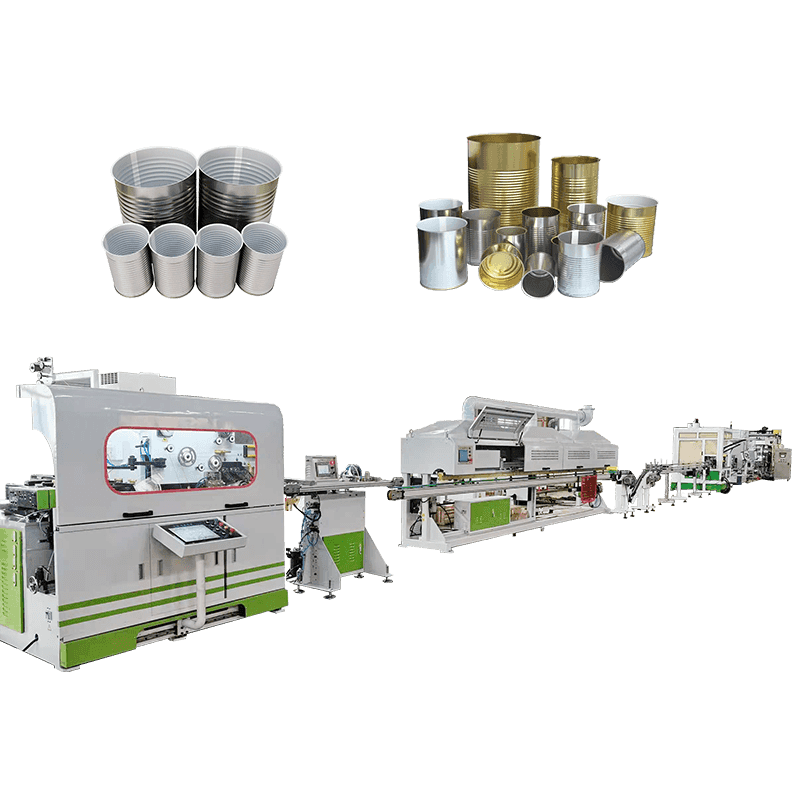
Manufacturing metal packaging for pressurized goods requires a highly specialized aerosol tin can production line to deliver exceptional burst-strength, absolute hermetic sealing, and high-speed throughput. Unlike standard two-piece beverage cans, aerosol containers must withstand sustained internal pressures often exceeding 1.2 to 1.8 MPa (12 to 18 Bar). Achieving this structural resilience requires a fully integrated, automated sequence of machinery that slits, rolls, welds, coats, neck-pans, tests, and packs tinplate sheets within tight dimensional tolerances.
The operational efficiency of an aerosol canning facility depends on balancing thermodynamic, electrical, and mechanical processes simultaneously. A single modern assembly line can produce between 200 and 500 finished cans per minute. Any defect in the automatic welding overlap or a microscopic void in the internal protective enamel coating can cause catastrophic container bursts or structural corrosion, making inline quality inspection systems critical to the survival of the production line.
Mechanical Stages of the Three-Piece Can Forming System
The core of a standard aerosol can line is the three-piece manufacturing section, which processes flat, pre-printed tinplate metal sheets into rigid, perfectly round cylinders. This workflow requires precise, mechanical handover steps between individual workstations.
Sheet Slitting and Circular Rolling
Large sheets of tinplate—typically coated with protective lithographic ink on the outside and anti-corrosive lacquer on the inside—are fed into a high-precision duplex slitter machine. Tungsten carbide rotary knives cut the sheets along horizontal and vertical axes to produce uniform blanks. These metal blanks are then moved via magnetic conveyor belts into a three-roll body-forming machine, which bends the flat tinplate into a concentric cylinder with a precise seam overlap of 0.3 to 0.5 millimeters.
High-Frequency Resistance Welding
The rolled cylinder immediately enters the welding station, where an upper and lower copper wire electrode guide the overlapped edges. A high-frequency alternating current—running between 150 and 500 Kilohertz—passes through the junction. The electrical resistance of the tinplate generates intense heat that fuses the metal together without needing filler materials or flux. This creates an unbroken, continuous weld seam that preserves the container's structural strength under high pressure.
Induction Side-Seam Coating and Curing
The extreme heat generated during the welding process vaporizes any pre-applied internal protective lacquers along the seam zone. To restore complete corrosion protection, an automated liquid or powder spray arm applies a fresh layer of epoxy-phenolic or polyester lacquer over the exposed interior weld track. The can bodies are then carried through an induction heating or gas-fired conveyor oven, curing the seam lacquer at temperatures of 250 to 280 degrees Celsius to form a solid, inert barrier.
Comparative Analysis: Standard Three-Piece vs. Monobloc Aluminum Lines
When planning infrastructure investments, factories must evaluate the mechanical trade-offs between three-piece welded tinplate configurations and one-piece monobloc extruded aluminum setups. The choice of manufacturing method impacts material costs, production line speeds, and maximum pressure capacities.
| Engineering Metric | Three-Piece Welded Tinplate Line | Monobloc Impact-Extruded Aluminum Line |
|---|---|---|
| Average Line Velocity | High Output; typically 300 – 500 cans per minute | Moderate Output; 120 – 240 cans per minute |
| Typical Raw Material Used | Electrolytic Tinplate (ETP) Sheet Metal | 99.5% Pure Aluminum Slugs (Buttons) |
| Deformation / Burst Pressure | Excellent; easily handles > 1.5 MPa pressures | Superior Elastic Limits; customizable wall thicknesses |
| Visual Structural Aesthetics | Features a visible side-seam line; stepped top/bottom | Seamless cylindrical surface; smooth brushed finish |
| Capital Equipment Outlay | Moderate; split across flexible independent stations | Extremely High; requires massive hydraulic press units |
Advanced Finial Processing: Necking, Flanging, and Seaming
Once a rigid, coated metal tube is formed, the container ends must be shaped to accept the top mounting cup and the bottom end piece. This forming requires multiple precise progressive die steps to prevent fracturing the hardened tinplate.
Multi-Stage Carousel Necking Systems
To reduce the top opening diameter of a standard can down to the industry standard 1-inch (25.4mm) aperture size, the cylinder passes through a series of progressive necking dies. Trying to reduce the diameter in a single stage can buckle the metal. The line uses an automated carousel that gradually compresses the top rim across 10 to 15 sequential forming stages, ensuring uniform material flow and maintaining absolute wall thickness consistency.
Double Seaming of the Bottom and Top Apertures
The flanged bottom end piece is mechanically joined to the can body using high-load double-seaming rollers. In the first operation, the roller interlocking profile bends the hook flap of the end piece around the body flange. The second-operation roller then tightens this interlocked hook seam under high mechanical force. This compresses an internal liquid rubber sealing compound inside the seam cavity, creating a leak-proof, hermetic seal capable of withstanding extreme internal pressures.
Inline Quality Control and Automatic Leak Testing
Because defects can compromise safety when dealing with pressurized flammable gases, every container must undergo non-destructive inline verification testing before being sent to downstream packaging stations.
- High-Sensitivity Rotary Leak Testers: Cans are loaded into a continuous rotary testing machine where they are sealed against independent rubber pads and charged with compressed air up to 0.6 to 0.8 MPa (6 to 8 Bar). Highly accurate electronic differential pressure sensors track the pressure over a fixed monitoring cycle, automatically identifying and rejecting any containers that exhibit minute pressure drops.
- Automated Vision Optical Sorting Array: High-speed digital camera networks scan the interior and exterior of each container under bright LED illumination. The system's processing software analyzes these images in real time to detect imperfections, instantly sorting out cans with lacquer scratches, structural dents, welding splatters, or lithographic printing misalignment.
- Online High-Voltage Porosity Testing: To ensure long-term stability when storing corrosive formulas like water-based hairsprays or insecticides, a high-voltage probe passes through the center of the can without touching the sides. If the system detects an electrical current jump, it indicates a micro-void or pinhole in the internal protective enamel coating, triggering an automatic pneumatic reject arm.
Optimal Production Setup and Factory Flow Integration
Maximizing the output of an aerosol line requires arranging equipment in a logical, continuous workflow that reduces transit damage and eliminates bottlenecks.
- Raw Material Conditioning and Feeding: Stacks of lithographed tinplate sheets are brought to the start of the line using automated guided vehicles (AGVs). These sheets must be kept in a climate-controlled storage zone to maintain a relative humidity below 50 percent, preventing surface oxidization before the manufacturing process begins.
- Synchronized Line Speeds and Accumulation Tables: Because machines run at different operating cycles, large-capacity mass-accumulation vertical bi-stream conveyor tables are positioned between major equipment zones. These tables temporarily hold up to 1,000 to 3,000 can bodies, allowing upstream welding machinery to continue running smoothly during brief downstream adjustments or tool changes.
- Palletization and Dust-Free Secondary Wrapping: The completed, verified leak-tested cans pass through an automated vacuum cleaning hood to remove any remaining dust particles. A multi-axis robotic arm then layers the containers onto heavy shipping pallets, inserting clean corrugated divider sheets between each tier before a stretch-wrapping machine applies protective plastic film to shield the lot during shipping.
Plant Safety Management and Predictive Line Maintenance
An aerosol tin can line operates under intense mechanical stresses and high electrical current profiles. Ensuring high line availability requires combining proactive equipment maintenance with strict mechanical safety interlock rules.
Modern assembly systems integrate a network of thermal imaging cameras and vibration sensors along the main high-frequency welding arm assembly and high-load double-seaming heads. These sensors continuously monitor performance, sending real-time data to a central processing hub. If a bearing housing shows an unexpected temperature increase of 15 degrees Celsius above standard baseline limits, the system alerts maintenance crews to replace the component before an unexpected mechanical breakdown halts the entire line.
Additionally, the high-frequency welding machines must be completely enclosed within robust radio-frequency (RF) shielding rooms to block electromagnetic interference from disrupting nearby factory electronics. The side-seam lacquer spraying systems require explosion-proof ventilation setups paired with continuous hydrocarbon sensors to manage volatile organic compound (VOC) levels safely, keeping the production floor safe, productive, and compliant with international environmental standards.