English
 عربى
عربى русский
Designing or upgrading an automated metal lid production line requires a strategic trade-off between dedicated ultra-high-speed mechanical systems and flexible modular servo-driven configurations: high-volume single-format plants demand dedicated mechanical pressing lines achieving speeds beyond 1,200 to 2,200 ends per minute with minimal scrap rates under 0.8%, whereas high-mix packaging operations maximize Overall Equipment Effectiveness (OEE) by deploying multi-diameter servo lines that reduce format changeover times from 8 hours down to under 45 minutes while accommodating complex lining and curling parameters.
High-Speed Dedicated vs. Modular Servo-Driven Production Lines
Selecting the optimal architecture for a modern metal lid production line determines not only immediate capital expenditure but also long-term manufacturing flexibility, unit cost efficiency, and raw material utilization. Metal closure manufacturing—covering beverage easy-open ends (EOE), food twist-off caps, luggage covers, and industrial crown closures—relies on high-precision stamping, curling, lining, and curing operations. Comparing dedicated mechanical lines against modular servo-driven layouts reveals key operational distinctions.
| Operational Parameter | High-Speed Dedicated Mechanical Line | Modular Servo-Driven Flexible Line |
| Maximum Output Speed | 1,500 – 3,000 ends per minute (EPM) | 400 – 1,000 ends per minute (EPM) |
| Format Changeover Time | 6 to 12 hours (Requires complete die set replacement) | 30 to 60 minutes (Recipe-driven software adjustments) |
| Material Yield Efficiency | High yield (Optimized for single sheet/scroll coil layout) | Variable yield (Adjusts to multi-diameter sheet layouts) |
| Initial Capital Investment | Substantially high ($2.5M – $6.0M+) | Moderate to High ($1.2M – $3.5M) |
| Maintenance Complexity | High mechanical wear; complex synchronization gearing | Lower mechanical wear; direct-drive electronics maintenance |
| Lining & Curing Integration | In-line high-speed rotary compound application | Multi-head modular liquid injection or plastisol lining |
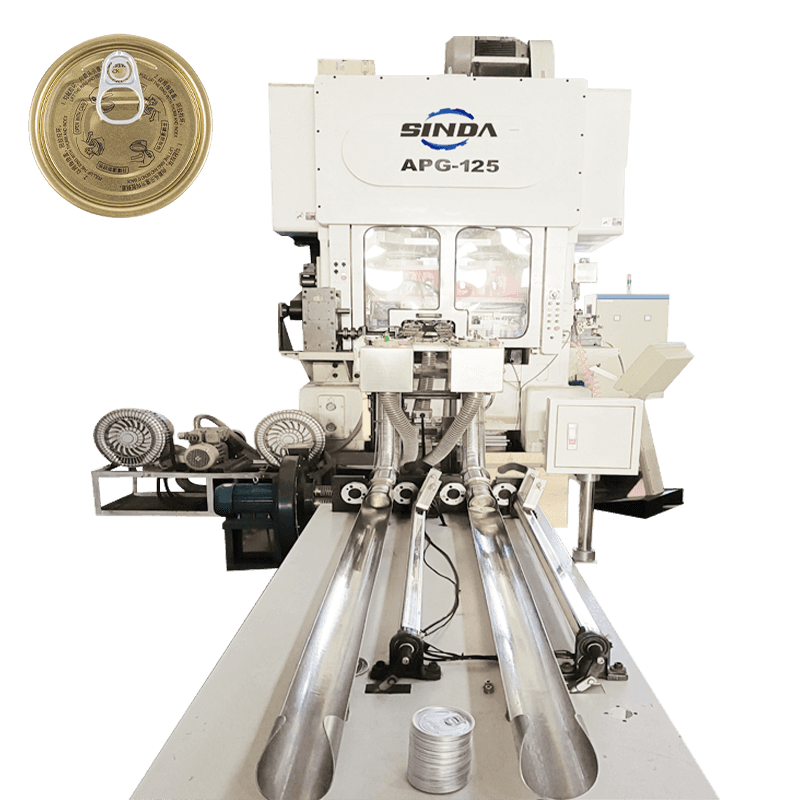
Dedicated high-speed systems rely heavily on multi-die mechanical presses operating in perfect synchronization with continuous rotary curling units and high-capacity compound liners. For instance, a 4-die or 6-die high-speed metal lid production line running standard 202-diameter beverage ends can maintain continuous operation at 2,400 parts per minute. In this regime, sheet-feeding mechanisms utilize high-precision double-sheet detectors and optical register systems to prevent misfeeds that could destroy high-value carbide tooling die sets valued at upwards of $250,000.
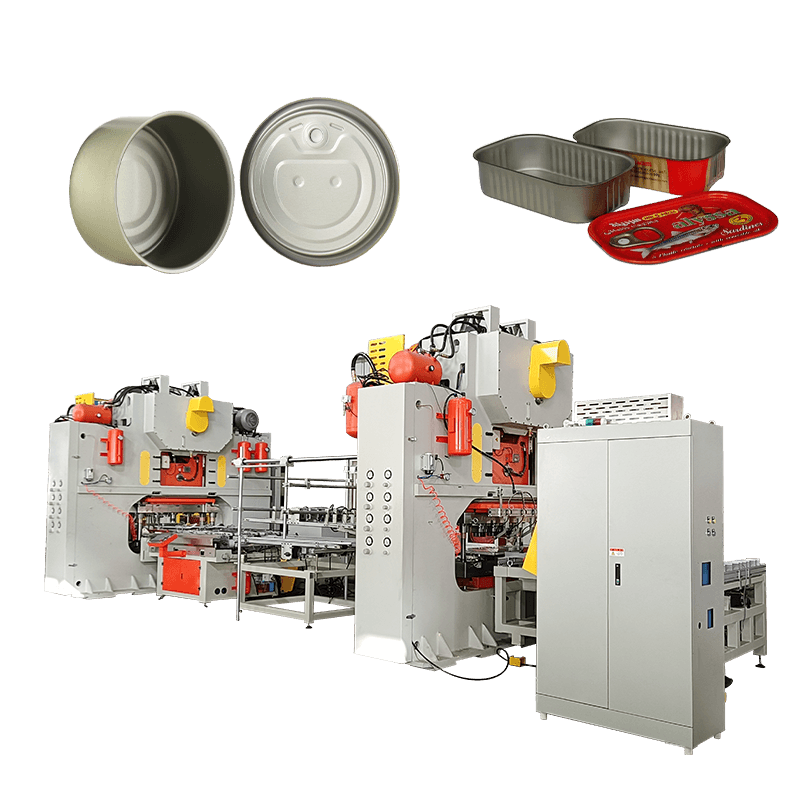
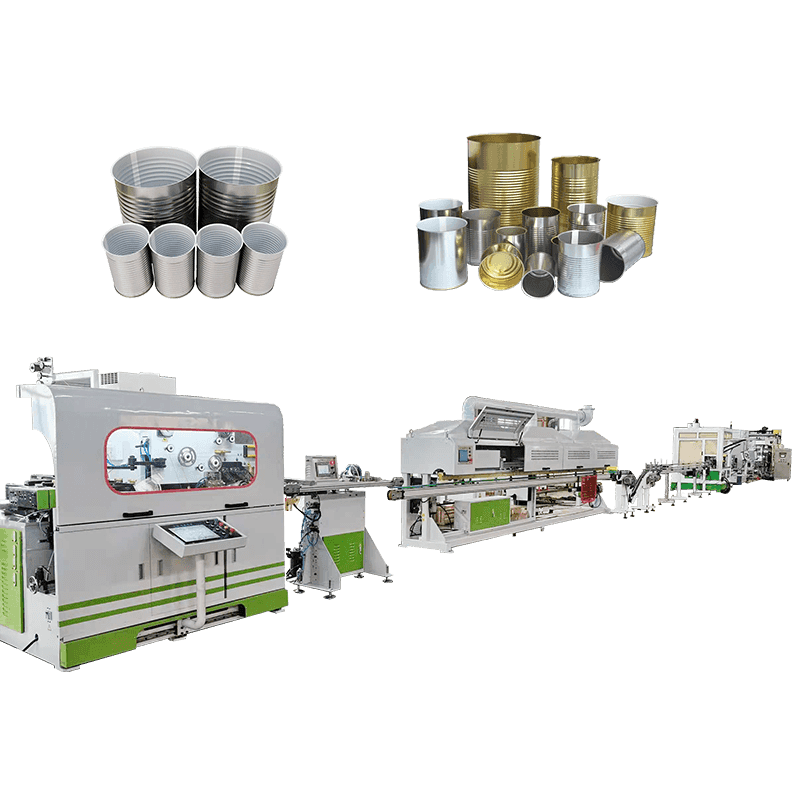
In contrast, modular servo-driven systems replace master mechanical camshafts with independent multi-axis motion controllers. Each stage of the metal lid production line—sheet feeding, blanking, drawing, edge curling, compound lining, and induction drying—operates under direct digital control. A facility manufacturing diverse product ranges, such as 53mm to 82mm food twist-off lids, achieves higher annual margin profitability via a servo line because the savings gained from eliminating multi-shift line downtime during format changes outweigh the absolute speed advantage of a dedicated mechanical press.
Raw Material Utilization and Stamping Die Technology
In high-volume metal closure manufacturing, raw material costs—specifically tinplate, electrolytic chromium-coated steel (ECCS), and aluminum alloys—account for 65% to 78% of total production expenses. Minimizing skeleton scrap during the initial blanking phase is the single most critical driver of operational profitability in any metal lid production line.
Scroll Shearing & Zig-Zag Feeding
Material Savings: 5.5% – 8.2%
Integrating primary scroll shears or zig-zag sheet feeders directly ahead of the blanking press optimizes the staggered interlocking arrangement of circular blanks. By reducing the web bridge distance between cuts down to 0.8 mm, raw material scrap is drastically curtailed compared to straight-line shearing methods.
Carbide Multi-Cavity Stamping Dies
Tooling Life: >150 Million Strokes
High-tier production lines utilize micro-grain tungsten carbide inserts for punch and die components. These precision-ground toolsets maintain ultra-tight tolerances (<0.002 mm), eliminating burrs and micro-fractures along the lid rim that could otherwise compromise hermetic seal integrity during retort processing.
Sheet Surface Coating Integrity
Defect Threshold: <0.01%
Pre-lacquered and printed coils or sheets undergo immense mechanical stress during drawing and forming. Advanced lines integrate non-contact optical oil film thickness gauges and automatic sheet lubricators to prevent lacquer scratching, which leads to internal corrosion once acidic food contents interact with exposed raw metal.
To demonstrate the economic impact: a high-capacity metal lid production line processing 500 million tinplate closures annually consumes roughly 7,500 metric tons of steel sheet. Implementing a high-precision zig-zag feeder that reduces material skeleton waste by just 4% generates direct annual savings exceeding $320,000 in raw material procurement alone, directly improving plant gross margins.
Forming Precision: Edge Curling and Profile Geometry
The forming phase translates flat metal discs into structurally sound closures capable of withstanding internal pressure, vacuum holding, and mechanical handling during high-speed capping lines. Edge curling is the pivotal intermediate step where the perimeter edge of the blanked metal disc is rolled inward.
- Uniform Radius Formation: Curling creates a smooth outer bead that prevents sharp metal edges from cutting operators or consumers while simultaneously providing mechanical stiffness to prevent lid ovality during conveyancing.
- Retention Cavity Creation: The curved perimeter profile acts as a precise mechanical channel to capture and hold liquid sealing compounds or pre-cut liner gaskets during high-speed spinning operations.
- Anti-Nesting Rib Profile: Specialized embossing stations within the metal lid production line apply precise stacking beads to the lid face, preventing nested closures from jamming inside high-speed feeding hoppers during client-side filling operations.
If curling geometry deviates by more than ±0.05 mm across its outer diameter, downstream sealing performance degrades. Insufficient curl depth causes liquid compound overflow during lining, whereas over-curling reduces the available internal channel area, leading to thin gasket cross-sections and subsequent micro-leaks during thermal sterilization processes.
Compound Lining, Gasket Injection, and Thermal Curing Systems
A metal closure cannot maintain container integrity without a high-performance sealing gasket. Modern metal lid production lines integrate precision lining systems tailored to specific lid geometries and product shelf-life requirements.
Liquid compound application relies on high-speed rotary lining machines equipped with automated gun nozzles. The formed metal lid is elevated onto a high-speed spinning chuck—rotating between 2,500 and 4,500 RPM depending on closure diameter—while an electro-pneumatic or piezoelectric injection valve deposits a metered dose of water-based or solvent-based rubber latex compound into the curl channel. Centrifugal force spreads the liquid evenly across the profile to form a seamless, airtight gasket upon drying.
For vacuum closures and lug-style caps, plastisol (PVC or PVC-free compound dispersions) is the industry standard. Plastisol lining requires precise thermal curing. The metal lid production line routes lined closures through continuous hot-air convection or electromagnetic induction curing tunnels heated to 180°C–215°C. Proper curing fluxes the PVC resin particles into a homogeneous, elastic gasket with controlled durometer hardness (typically Shore A 45–60). Under-curing leaves the compound soft and tacky, causing lid adhesion during bulk storage, whereas over-curing embrittles the compound, destroying its sealing resilience under thermal vacuum processing.
Quality Inspection Systems and Vision-Guided Automation
High-value brand owners demand near-zero defect rates (measured in parts per million, or PPM). Modern automated metal lid production lines consequently incorporate multi-station machine vision inspection platforms directly integrated into the high-speed transfer track.
High-resolution CMOS cameras paired with specialized multi-angle LED ring lights inspect 100% of the production flow at line speeds exceeding 2,000 parts per minute. Key automated inspection parameters include:
- Dimensional Accuracy & Ovality: Verification of overall rim diameter, curl height, and lug placement geometry to guarantee flawless capping torque.
- Compound Coverage Integrity: Deep-learning vision algorithms evaluate the sealing ring channel to spot voids, air bubbles, compound contamination on the public side, or inconsistent bead width.
- Surface Flaw & Print Registration: High-speed surface scanning detects metal scratches, lacquer peeling, rust spots, and misaligned lithographic artwork before final packaging.
Defective lids identified by the vision system trigger high-speed pneumatic blow-off valves that blast contaminated items into secure reject bins without interrupting line momentum. Statistical process control (SPC) software logs defect trends in real time, alerting technicians to emerging die wear or nozzle clogging before batch quality thresholds are breached.