English
 عربى
عربى русский
The Operational Mandate and Core Objectives of Easy Open End Manufacturing
An Easy Open End (EOE) production line is a highly synchronized, high-speed automated manufacturing system that transforms raw metal coils into precision-scored, tabbed lids for food and beverage cans with production capacities frequently exceeding 1,200 ends per minute per lane. Achieving this staggering output requires an industrial layout that merges high-tonnage mechanical stamping, micro-millimeter metal scoring precision, automated fluid compound lining, and continuous optical vision checks. The absolute mandate of an EOE line is to balance structural integrity with opening convenience, ensuring the lid remains hermetically sealed under intense internal pressure while tearing open smoothly along its pre-scored path under minimal human pulling force.
In the metal packaging and food processing industries, a fraction of a millimeter or a micro-gram of sealing compound means the difference between a reliable product and a catastrophic commercial recall. If the residual score thickness along the lid opening path varies by just 3 micrometers, the end will either prematurely fracture during thermal retort processing or refuse to open when pulled by a consumer. Consequently, modern EOE production cells utilize ultra-rigid high-speed presses running specialized carbide progressive dies, supported by automated conversion presses that perform up to nine individual cold-working forming operations on a single metal blank.
This industrial ecosystem requires careful optimization across raw material metallurgy, sheet metal lubrication, thermal curing kinetics, and multi-axis sensor tracking. Whether forming a basic round beverage pull-tab or a large rectangular full-aperture food can lid, the entire line acts as a single continuous fluid machine. Understanding the structural progression of the raw material from uncoiler to final packed pallet reveals the sophisticated mechanical boundaries that make easy open lids a cornerstone of global packaging logistics.
Upstream Processing: Coiling, Shell Pressing, and Curling Geometry
The manufacturing lifecycle of an easy open end begins in the upstream preparation zone. Here, raw structural metal coils are unrolled, checked for structural consistency, and converted into basic un-scored circular disks known as shells.
Material Lubrication and Uncoiling Infrastructure
Large coils of aluminum alloy (such as 5182-H48 or 5182-H19, known for high magnesium content and tensile strength) or Electrolytic Tinplate (ETP) are mounted onto hydraulic uncoiling mandrels. Before the metal enters the blanking press, it passes through a high-precision wax coater system. This system applies a microscopic, uniform layer of food-grade synthetic lubricant—typically paraffin wax or petrolatum—at a precise coat weight of 40 to 60 mg per square meter.
This lubricating layer prevents the metal from seizing, tearing, or galling against the high-speed tungsten carbide tooling inside the shell press. Any variation in lubrication consistency leads to uneven material draw, causing geometric skewing that compromises the perimeter sealing flange of the final lid.
High-Speed Shell Press Stamping and Perimeter Curling
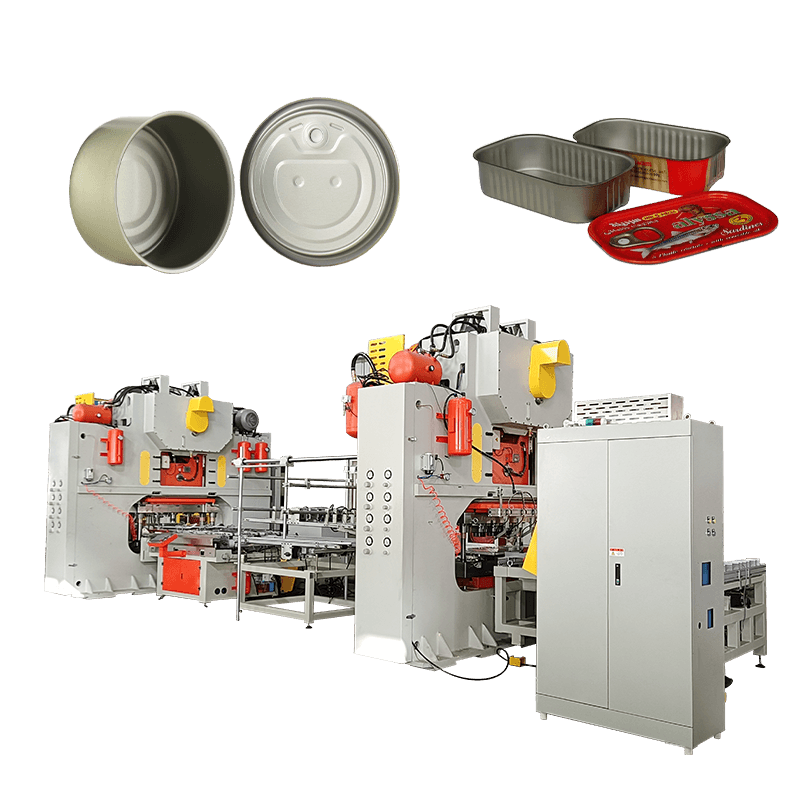
The lubricated strip is fed directly into a wide-bed, double-action shell press operating at speeds up to 400 strokes per minute using multi-cavity dies (often processing 4 to 6 shells per stroke). The press blanks out circular discs and immediately draws them into a shallow cup profile with a distinct chuck wall and a raw, vertical perimeter edge.
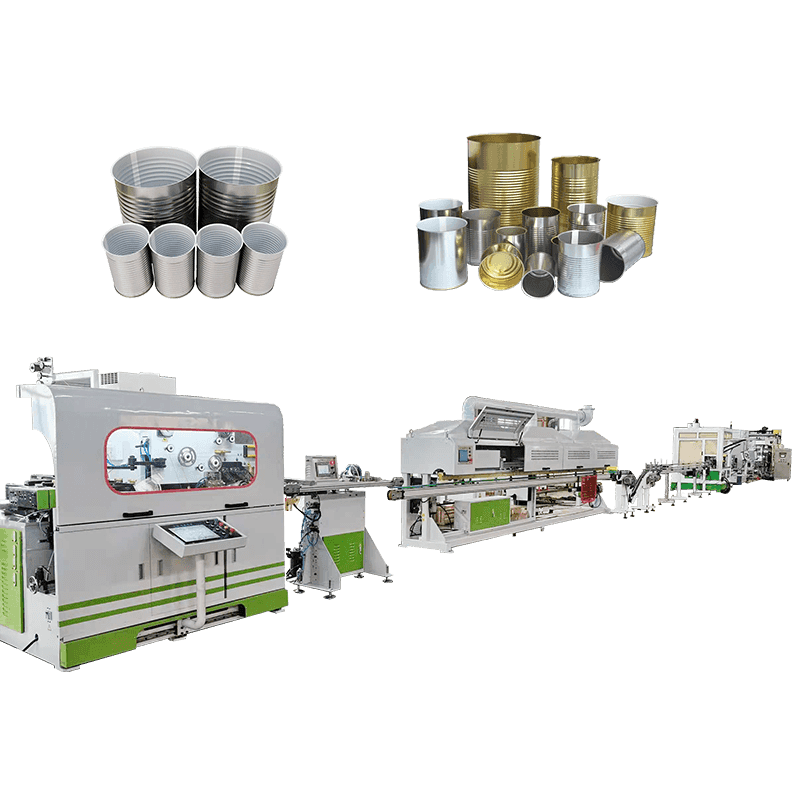
These raw shells exit the press via pneumatic trackwork and roll into a high-speed rotary curler. The curling machine forces the outer vertical rim of the shell through a shrinking spiral groove, bending the raw edge inward to form a smooth, curved perimeter lip. This curling profile performs two critical tasks: it provides the structural rigidity required for pneumatic transport through downstream high-velocity air tracks, and it defines the precise pocket geometry that will hold the rubberized seaming compound needed to seal the lid to the can body.
The Fluid Lining Process and Thermal Compound Curing
Once curled, the shells move into the compound lining department. Because metal-to-metal joints cannot form a true hermetic seal on high-speed double-seaming production lines, every easy open end must have an internal liquid gasket lining applied to its perimeter pocket.
The curled shells feed into a rotary lining machine containing multiple application nozzles. The shells are spun at speeds up to 1,500 RPM while a high-pressure pneumatic valve shoots a precise stream of water-based or solvent-based liquid synthetic rubber compound directly into the curled channel. The injection window is calculated down to the millisecond to ensure the compound overlaps perfectly without creating structural lumps or gaps.
Directly following the injection station, the wet lined shells are routed into a multi-zone vertical drying oven or an induction curing tunnel. The thermal processing profile follows a strict progression:
- The shells pass through a pre-heating zone at 70°C to 90°C to drive off volatile surface solvents without blistering the compound surface.
- The components enter the primary baking zone, holding a continuous core temperature of 110°C to 135°C for roughly 90 seconds to cross-link the elastomeric polymers.
- The ends travel through a cooling zone using a dehumidified cross-flow air grid to bring the compound back to room temperature, ensuring a resilient, non-tacky finish before stacking.
The dry weight of the applied compound is continuously audited using analytical scales. For a standard 73mm food can end, the target dry compound weight is typically held to 28 mg (±3 mg). If the weight drops below this threshold, the can will fail to achieve a gas-tight seal during seaming; conversely, excess compound spills out during the seaming process, contaminating the tooling and leading to costly cleaning shutdowns.
The Conversion Press: Bubble Forming, Precision Scoring, and Tab Riveting
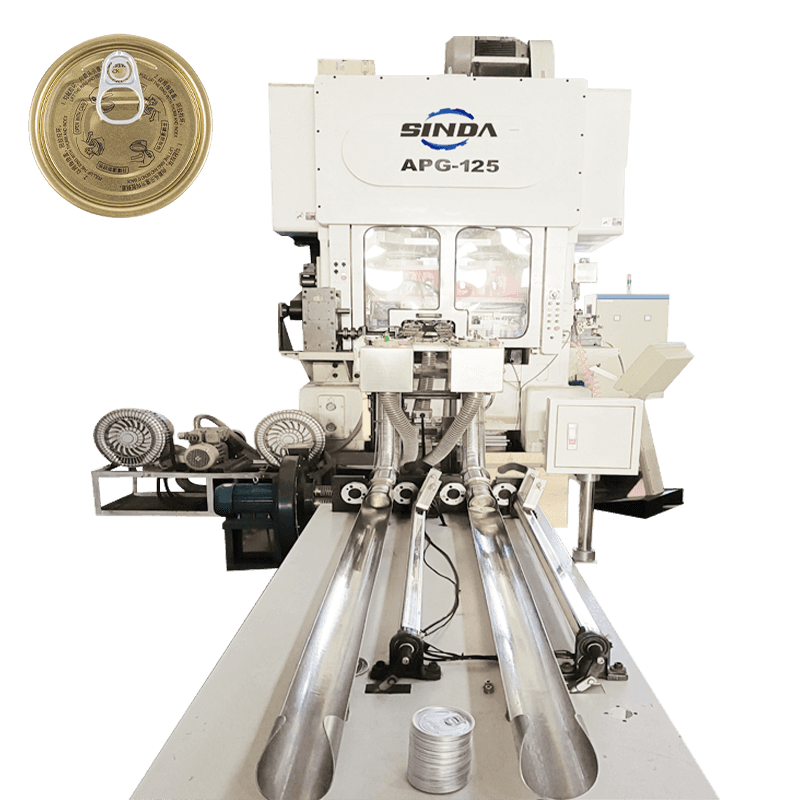
The heart of an EOE production line is the conversion press. This ultra-rigid, multi-station progressive tool takes the lined shells and transforms them into an authentic easy open mechanism by forming an integrated rivet, cold-cutting a score line, and staking a metal pull-tab onto the lid assembly.
Unlike conventional stamping systems, the conversion press splits the manufacturing process across two independent paths that meet at a final staking station: the primary end lane which prepares the shell, and a secondary tab lane which stamps and folds the pull-tab from a narrow auxiliary metal strip.
The main end conversion sequence relies on a sequence of progressive cold-working stations:
- **Rivet Bubble Forming:** The press strikes the center of the shell from below, drawing a localized hollow bubble or button upward out of the existing metal plane.
- **Rivet Pre-Forming:** Secondary dies squeeze the bubble radially, reducing its diameter while sharpening its vertical wall profile to establish a distinct rivet neck.
- **Precision Penetration Scoring:** A hardened tungsten carbide die punches into the top surface of the lid, displacing metal to form a sharp, V-shaped score outline. The remaining metal beneath the score line—the residual score thickness—is compressed to exactly 65 micrometers (±4 micrometers).
- **Tab Staking and Rivet Flattening:** The formed pull-tab is transferred from the parallel tab lane and slipped over the upright central rivet button. The staking die then strikes the button from above, flattening the metal outward to form a solid rivet head that permanently locks the tab to the lid.
Performance Spectrum: Engineering Metrics Across EOE Diameters
Configuring an EOE line requires calibrating stroke velocities, stamping tonnages, and scoring loads to match the structural requirements of the target lid profile. The table below details the performance profiles across standard industry easy open dimensions.
| Standard End Size Metric (Diameter) | Primary Application / Field Use | Optimal Conversion Line Speed | Target Residual Score Thickness | Average Pop / Pull Force Limit |
|---|---|---|---|---|
| 202 Diameter (52mm) | Carbonated Soft Drinks / Beer Cans | 1,000 - 1,400 ends/min per lane | 60 - 68 micrometers | Pop: 18 N / Pull: 26 N |
| 209 Diameter (65mm) | Ready-to-Drink Teas / Juices | 800 - 1,000 ends/min per lane | 62 - 70 micrometers | Pop: 20 N / Pull: 28 N |
| 300 Diameter (73mm) | Canned Soups / Vegetables (Full Aperture) | 500 - 700 ends/min per lane | 75 - 85 micrometers | Pop: 24 N / Pull: 38 N |
| 401 Diameter (99mm) | Powdered Infant Formula / Large Food Cans | 350 - 500 ends/min per lane | 90 - 105 micrometers | Pop: 28 N / Pull: 42 N |
The engineering data demonstrates that smaller drink configurations achieve high processing velocities up to 1,400 ends per minute due to their reduced sheet metal mass and localized score paths. Larger full-aperture options require heavier stamping loads and thicker residual score profiles to survive the high pressures of thermal food sterilization loops without failing.
Downstream Integration: Repair Coating and Optical Vision Audits
After leaving the mechanical conversion tooling, the ends are fully formed but structurally vulnerable. The cold-working process that scores the metal and forms the rivet breaks or stretches the internal protective organic lacquer layer on the lid, exposing bare aluminum or steel to the elements.
Electrostatically Targeted Repair Lacquer Spraying
To prevent corrosive food acids or beverage compounds from attacking the exposed bare metal, the ends travel onto an integrated repair spray conveyor. High-speed electrostatically assisted spray guns target the score line and rivet area, applying a precision layer of food-grade vinyl or epoxy-free resin lacquer.
The coated ends pass through a secondary curing oven at 150°C to 180°C for 45 seconds. This thermal pass cures the repair lacquer, forming a continuous protective barrier that prevents pinhole oxidation and ensures a long product shelf life.
Online Multi-Camera Optical Inspection Frameworks
Before the finished ends enter the final counting and packaging stations, they pass beneath a high-speed, online multi-camera optical vision scanner. Operating under synchronized stroboscopic LED lighting, the computer vision system captures high-resolution images of each end at speeds exceeding 25 units per second.
The inspection software analyzes the images in real time to verify tab alignment, look for surface scratches, and confirm the completeness of the perimeter lining compound. Any parts exhibiting deviations—such as a misplaced pull-tab or a micro-scratch on the lacquer skin—are flagged and automatically blasted into a reject bin via a high-pressure pneumatic reject pulse, guaranteeing that only flawless ends make it into the shipping sleeves.
Automation Mechanics: Smart Monitoring and In-Line Quality Verification
Modern EOE production lines are no longer run through manual spot checks. To maintain high process capability metrics (Cpk) under fast production velocities, the system relies on an array of automated sensors linked to a central programmable logic controller (PLC).
Automated tooling verification follows a continuous loop during production:
- Acoustic emission sensors mounted on the conversion press frame continuously monitor the structural sound frequencies of each die strike to detect early signs of tooling wear or microscopic punch chipping.
- In-line pneumatic eddy-current gauges measure the residual score depth on every 500th end, feeding thickness metrics directly back to the press control console.
- If the residual score thickness moves out of specification toward the 60 micrometer limit, the automated control loop activates micro-step servo adjusters inside the press ram to correct the scoring depth without stopping the line.
Following quality verification, the finished lids pass into an automated pneumatic paper-wrapping or plastic-sleeving station. The wrapping machine counts the ends using high-speed proximity sensors, grouping them into standardized sticks of 150 to 250 pieces before wrapping them in protective kraft paper. These sleeves are then transferred by robotic arm arrays onto a centralized shipping pallet, completing a fully automated manufacturing loop that requires zero direct human contact from raw coil unrolling to final shrink-wrapped pallet storage.