English
 عربى
عربى русский
Why 3 Piece Food Tin Can Production Lines Remain Essential in Modern Packaging
The 3 piece food tin can production line continues to play a critical role in modern food packaging because it combines high-volume manufacturing efficiency, strong sealing performance, flexible sizing capability, and long-term product protection. Compared with many alternative packaging formats, 3 piece food cans offer excellent mechanical strength, long shelf life, and reliable protection against moisture, oxygen, and external contamination.
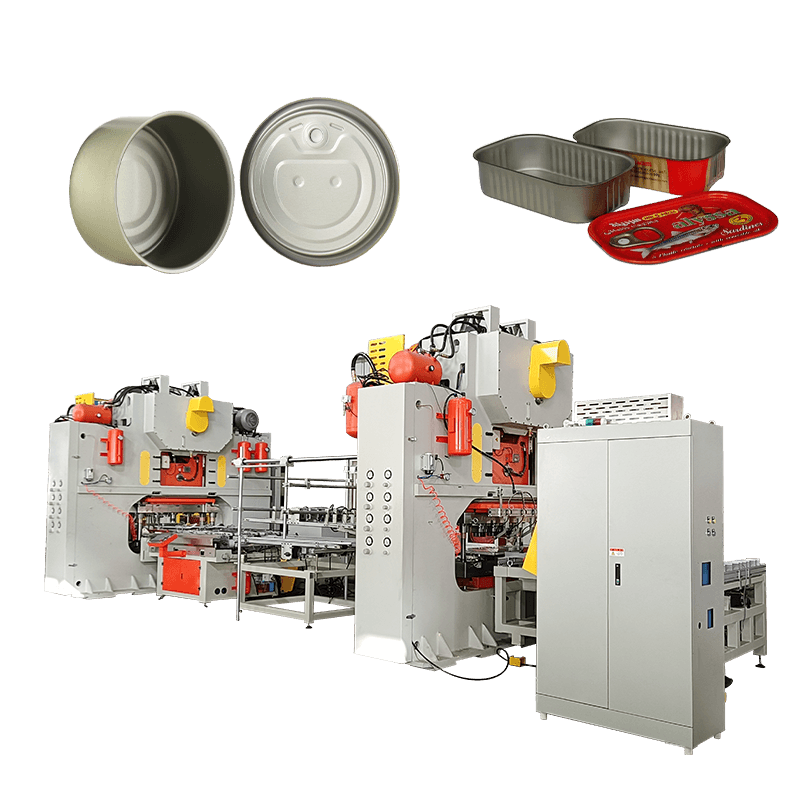
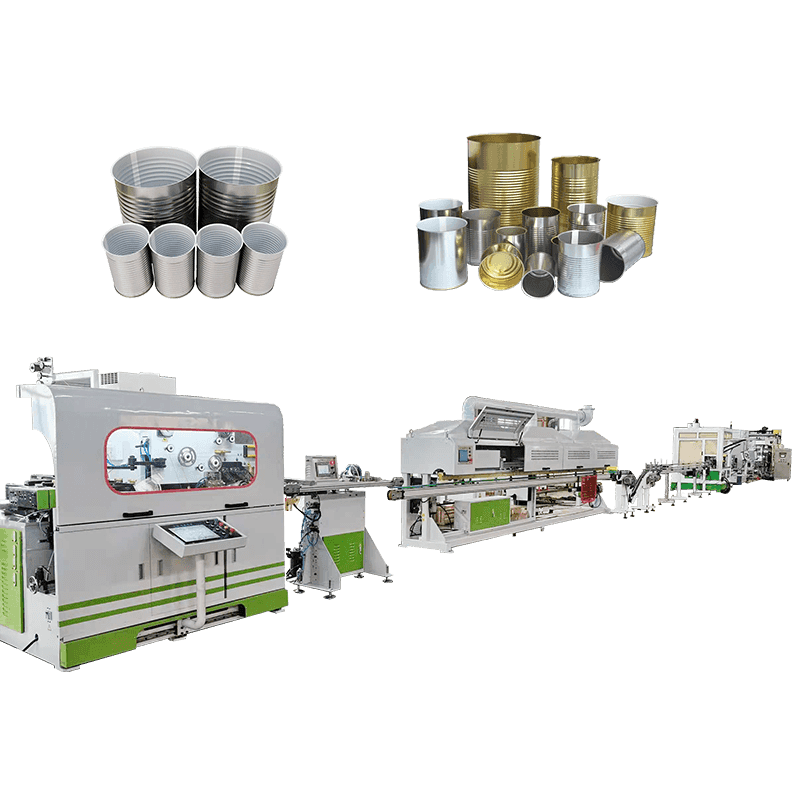
A standard 3 piece food tin can consists of three separate components: the cylindrical body, the top lid, and the bottom end. These parts are manufactured and assembled through a highly automated production process involving sheet feeding, cutting, welding, flanging, beading, seaming, coating, and inspection operations.
Food manufacturers continue to rely on metal can packaging for vegetables, fruits, seafood, meat products, dairy items, sauces, soups, and pet food because of its durability and compatibility with sterilization processes. As global demand for packaged food increases, production lines are becoming faster, more energy efficient, and more automated to meet large-scale manufacturing requirements.
How a 3 Piece Food Tin Can Production Line Operates
A 3 piece food tin can production line transforms flat metal sheets into sealed cylindrical food containers through a sequence of precision manufacturing stages.
Metal Sheet Feeding and Cutting
Production begins with coated tinplate or steel sheets fed into automatic cutting equipment. The sheets are cut into rectangular blanks that will later form the can body.
Accurate cutting is important because dimensional variations may affect welding accuracy and final seam integrity.
Body Forming and Welding
The rectangular blank is rolled into a cylindrical shape and welded along the side seam. Electric resistance welding is commonly used to create strong, continuous seams suitable for food packaging applications.
Modern welding systems can operate at extremely high speeds while maintaining precise seam consistency required for food safety standards.
Internal and External Coating
Protective coatings are applied to prevent corrosion and avoid direct contact between food products and metal surfaces. Different coating formulations are selected depending on food acidity and storage requirements.
Flanging and Beading
The open ends of the can body are flanged outward to prepare for end seaming. Beading operations strengthen the cylindrical structure and improve resistance to internal pressure changes during sterilization.
End Seaming Operations
The top and bottom ends are attached through double-seam technology, creating airtight and leak-resistant closures.
| Production Stage | Primary Function | Operational Importance |
|---|---|---|
| Sheet Cutting | Prepare body blanks | Dimensional accuracy |
| Body Welding | Create cylindrical body | Structural integrity |
| Coating Application | Corrosion protection | Food safety |
| Double Seaming | Seal can ends | Leak prevention |
Advantages of 3 Piece Food Tin Can Production Lines
The continued popularity of 3 piece can manufacturing systems is linked to their production flexibility and packaging reliability.
Flexible Size Production
Production lines can be configured to manufacture different can diameters and heights for various food categories. This flexibility supports both large-volume industrial food packaging and smaller retail packaging formats.
Strong Mechanical Durability
Metal cans provide excellent resistance against crushing, puncture damage, and transportation stress compared with many flexible packaging alternatives.
Excellent Barrier Protection
Tin cans effectively block light, oxygen, and moisture exposure, helping maintain food quality and extend shelf life.
Compatibility With Sterilization Processes
Food cans must tolerate thermal sterilization and retort processing without losing structural stability. Metal packaging performs well under these demanding conditions.
- High-speed production capability
- Strong sealing reliability
- Long shelf-life support
- Good transportation durability
- Flexible size customization
Critical Equipment Used in 3 Piece Food Tin Can Production Lines
Modern can production lines rely on multiple interconnected machines operating under synchronized automation systems.
Automatic Sheet Feeders
Sheet feeders ensure continuous material supply and reduce production interruptions. Precision feeding also improves cutting accuracy and material utilization.
Body Welders
Welding systems are among the most important machines in the production line because seam quality directly influences container integrity.
Curing Ovens
After coating application, curing ovens help stabilize protective layers through controlled heating processes.
Flangers and Seamers
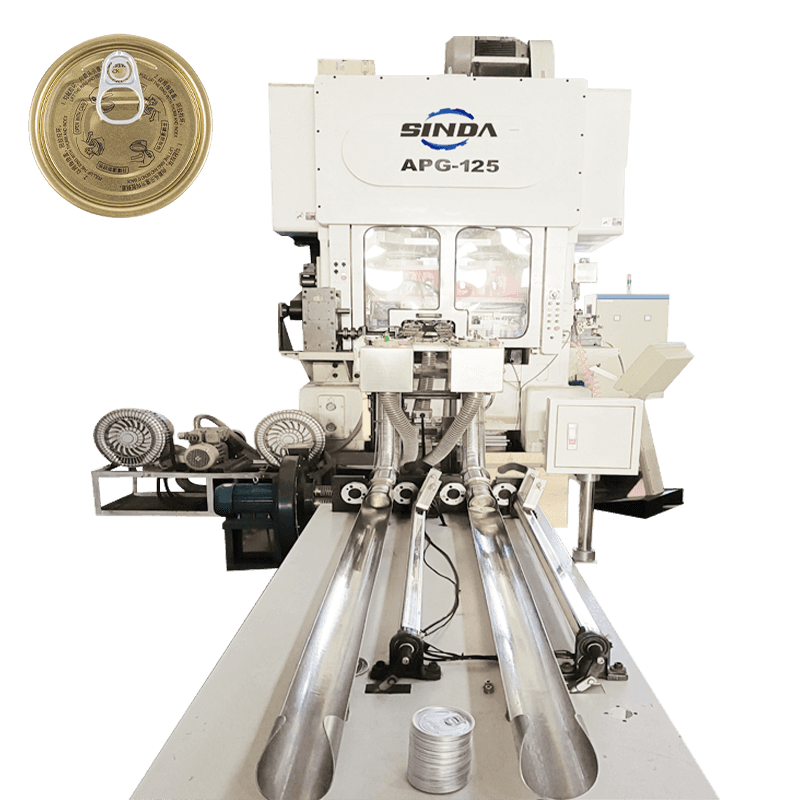
Flanging and seaming machines create secure connections between the body and can ends while maintaining dimensional consistency.
Inspection Systems
Automated inspection equipment monitors weld quality, coating integrity, seam dimensions, and leak performance during production.
| Machine Type | Production Role | Manufacturing Benefit |
|---|---|---|
| Sheet Cutter | Metal blank preparation | Higher dimensional accuracy |
| Body Welder | Seam formation | Strong body integrity |
| Seamer | End sealing | Leak prevention |
| Inspection Unit | Quality verification | Reduced defect rates |
Food Safety Requirements in Tin Can Manufacturing
Food packaging production lines must comply with strict hygiene and safety standards to ensure product protection throughout storage and distribution.
Coating Safety and Corrosion Prevention
Internal coatings prevent chemical interaction between food products and metal surfaces. Different food types require different corrosion protection strategies.
Leak Detection Systems
Leak inspection systems identify sealing defects before products reach filling facilities. Airtight sealing is essential for preventing contamination and microbial growth.
Weld Integrity Inspection
Continuous seam inspection helps ensure welded areas maintain structural consistency throughout production.
Even small welding defects can compromise food preservation performance and reduce package shelf life.
Clean Manufacturing Environments
Dust control, lubricant management, and controlled production environments help reduce contamination risks during manufacturing.
Automation Trends in 3 Piece Food Tin Can Production Lines
Automation technology is transforming can manufacturing by improving production speed, quality consistency, and operational efficiency.
High-Speed Servo Control Systems
Servo-driven automation systems provide more accurate machine synchronization and faster production adjustments.
Real-Time Monitoring Technology
Modern production lines increasingly use sensors and digital monitoring systems to track seam quality, production speed, energy usage, and defect rates in real time.
Automated Quality Inspection
Camera-based inspection systems improve detection accuracy and reduce reliance on manual inspection processes.
Energy Efficiency Improvements
Energy-saving motors, optimized heating systems, and efficient compressed air management help reduce operating costs in high-volume production facilities.
- Digital production monitoring
- Automated seam inspection
- Servo-driven machine synchronization
- Reduced material waste systems
- Predictive maintenance integration
Factors Affecting Production Efficiency and Output Quality
Production performance depends on equipment precision, raw material quality, maintenance practices, and operational control systems.
Metal Sheet Quality
Variations in sheet thickness, coating consistency, or flatness may affect welding accuracy and seam quality.
Machine Calibration Accuracy
Precise machine alignment is essential for maintaining dimensional consistency throughout production runs.
Production Speed Balance
Increasing line speed without maintaining proper synchronization may increase defect rates or seam instability.
Maintenance Scheduling
Routine inspection and preventive maintenance reduce unplanned downtime and improve long-term production stability.
| Operational Factor | Production Impact | Quality Influence |
|---|---|---|
| Sheet Material Quality | Stable forming process | Improved seam consistency |
| Machine Calibration | Higher operational precision | Reduced defect rates |
| Maintenance Practices | Lower downtime | Consistent product quality |
| Automation Integration | Faster production cycles | More reliable inspection |
Future Development of 3 Piece Food Tin Can Production Line Technology
Future advancements in food can manufacturing are expected to focus on sustainability, production flexibility, digital monitoring, and energy optimization.
Lightweight Metal Packaging Development
Manufacturers are increasingly reducing metal thickness while maintaining structural performance to lower material usage and transportation costs.
Advanced Smart Inspection Systems
Artificial intelligence and machine vision technologies are improving defect detection accuracy during high-speed production.
Higher Production Flexibility
Quick-change tooling systems allow faster switching between can sizes and production specifications, improving manufacturing efficiency for diversified product lines.
Sustainable Manufacturing Practices
The integration of recyclable materials, energy-efficient equipment, and reduced waste production strategies is becoming increasingly important in global packaging manufacturing.
The continued evolution of automation systems, precision welding technology, intelligent inspection equipment, and sustainable metal processing methods is positioning the 3 piece food tin can production line as a highly efficient and reliable solution for future food packaging manufacturing requirements.