English
 عربى
عربى русский
Understanding the 3-Piece Food Tin Can Production Process
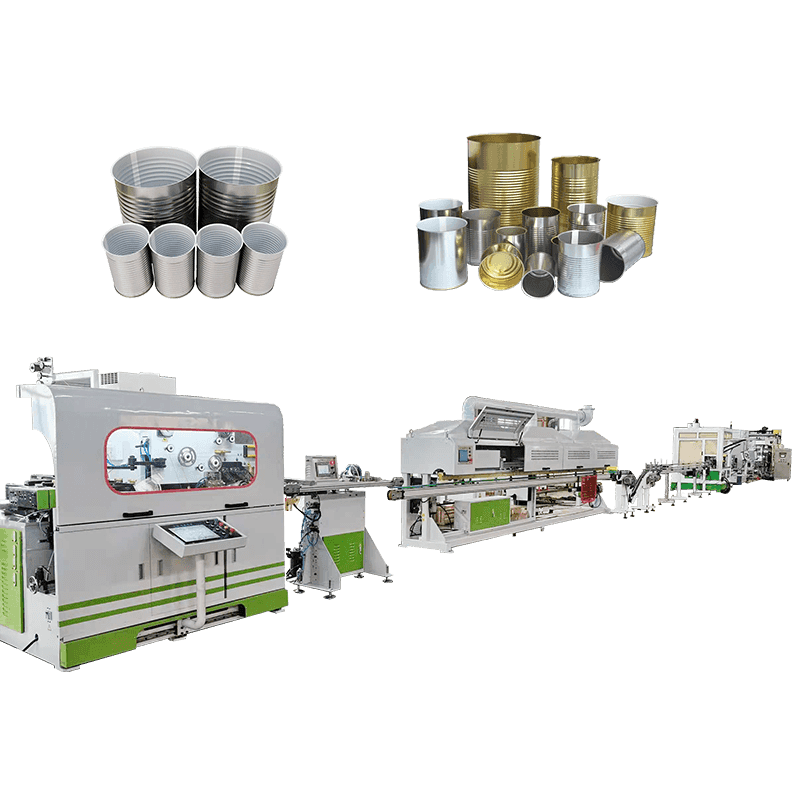
Before discussing fault diagnosis, it is essential to understand the key stages involved in the production of 3-piece food tin cans. The process begins with the cutting of metal sheets, which are typically made from tin-coated steel. These sheets are then formed into the body of the can, which involves deep drawing and ironing. Following this, the can’s top and bottom are also formed, and these components are then assembled together. The production line also includes various additional steps, such as cleaning, coating, and curing, to prepare the cans for use. Once the basic structure of the can is formed, it is moved to the filling and sealing stages, where the can is filled with food products and sealed with a lid.
Throughout this multi-step process, different machines are responsible for each task, from cutting to sealing. These machines must operate efficiently and continuously to ensure high throughput and consistent product quality. As such, any fault in the system could disrupt the entire production process, leading to inefficiencies and potentially defective products. This is where automated fault diagnosis systems come into play.
The Role of Automated Fault Diagnosis in Manufacturing
An automated fault diagnosis system is designed to monitor the performance of machines and equipment throughout the production process. These systems use various sensors and diagnostic tools to detect abnormalities in machine performance, such as unusual vibrations, temperature changes, pressure inconsistencies, or malfunctioning parts. Once a fault is detected, the system can trigger an alert, helping operators identify the issue before it escalates into a more serious problem. In advanced systems, the diagnosis process may even be automated to the point where the system can recommend corrective actions or adjust machine settings in real-time to mitigate the fault.
In the context of a 3-piece food tin can production line, the implementation of automated fault diagnosis systems can lead to numerous benefits. These systems provide the ability to monitor all stages of the production line simultaneously, detecting problems early and preventing minor issues from turning into costly disruptions. With automated fault diagnosis, manufacturers can significantly reduce machine downtime, improve maintenance scheduling, and enhance overall production efficiency.
Common Faults in 3-Piece Food Tin Can Production Lines
There are various potential faults that can occur in a 3-piece food tin can production line, each with its own set of causes and solutions. These faults can arise at different stages of the production process, and an automated system must be able to detect a wide range of issues. Some common problems include:
- Mechanical Failures: Issues such as motor failures, gearbox problems, or misalignment of components can cause production interruptions. These faults may manifest as unusual noises, vibration, or irregular machine behavior.
- Forming Issues: During the can forming process, defects such as wrinkles, misformed cans, or incomplete shapes may occur. These issues could be caused by incorrect material feeding, improper die settings, or insufficient lubrication.
- Sealing Problems: Inadequate sealing of the cans, such as improperly sealed lids or imperfect seams, can lead to leakage or contamination of the contents. These problems might be the result of equipment malfunctions, incorrect pressure settings, or wear and tear on sealing components.
- Filling Irregularities: Problems with the filling machines, such as inconsistent filling levels, can lead to cans being underfilled or overfilled. These issues may be caused by faulty sensors, clogged filling nozzles, or improperly calibrated equipment.
- Quality Control Failures: Inaccurate quality control measurements, such as can dimensions or weight, may result in non-compliant products being shipped to customers. These issues can be caused by sensor failures, incorrect calibration, or problems with the feedback loop between production and quality control systems.
Each of these faults can impact the overall efficiency and product quality of the production line. An automated fault diagnosis system must be able to detect these issues in real-time and provide accurate information to operators, allowing for a swift resolution. Without such a system, identifying and addressing faults could be delayed, leading to longer downtimes, wasted raw materials, and the potential for larger-scale production errors.
How Automated Fault Diagnosis Systems Work in a 3-Piece Food Tin Can Production Line
Automated fault diagnosis systems in a 3-piece food tin can production line typically operate through a network of sensors and data collection points placed throughout the production line. These sensors measure various physical parameters, such as temperature, vibration, pressure, speed, and electrical current, which provide valuable information about the machine’s performance. This data is continuously fed into a central control system, where it is analyzed in real-time.
In many systems, advanced algorithms and artificial intelligence (AI) are employed to process the incoming data and identify patterns that might indicate an impending fault. For instance, the system might detect abnormal vibrations from a forming machine, which could signal that a component is wearing out or becoming misaligned. Similarly, if the filling machine is not operating within the expected pressure range, the system may recognize this discrepancy and trigger an alert.
Once a fault is detected, the system typically classifies the issue based on its severity. Minor faults might be flagged for operator attention during scheduled maintenance, while more serious issues could trigger immediate alarms to halt the production line temporarily. Some systems go further by suggesting potential corrective actions, such as adjusting machine settings, replacing a faulty part, or shutting down the equipment for repairs.
Advantages of Implementing Automated Fault Diagnosis Systems
There are several key advantages to incorporating an automated fault diagnosis system in a 3-piece food tin can production line. One of the primary benefits is the reduction in downtime. By detecting faults early and allowing for quick interventions, these systems minimize the time machines spend offline, helping to maintain consistent production rates. This is particularly important in high-volume production environments where even short delays can result in significant losses.
Another advantage is improved maintenance practices. With an automated fault diagnosis system in place, maintenance can be performed proactively, rather than reactively. Operators can schedule repairs and component replacements before a failure occurs, reducing the risk of unexpected breakdowns and extending the lifespan of the equipment. Furthermore, by having real-time data on the condition of each machine, manufacturers can make more informed decisions about when to perform maintenance and which parts to focus on, helping to reduce unnecessary costs.
Automated fault diagnosis systems also contribute to enhanced product quality. By detecting issues early in the production process, such as sealing defects or misalignment, the system ensures that faulty cans do not reach the final stages of production. This helps to maintain consistent product quality, meeting customer expectations and regulatory requirements.
Challenges of Implementing Automated Fault Diagnosis Systems
While automated fault diagnosis systems offer numerous benefits, implementing such systems in a 3-piece food tin can production line is not without challenges. One of the main obstacles is the initial investment cost. The installation of sensors, data collection infrastructure, and AI algorithms requires a significant upfront investment. However, many manufacturers consider this an investment that pays off in the long run through reduced downtime, fewer repairs, and better-quality products.
Another challenge is the complexity of integrating these systems with existing equipment. In some cases, older machines may not be equipped with the necessary sensors or data interfaces to allow for full integration with an automated fault diagnosis system. Retrofitting older equipment or replacing outdated machinery can add additional costs and require specialized expertise. Additionally, ensuring that the system is correctly calibrated and fine-tuned to detect specific faults without generating false positives can be a time-consuming and technically challenging task.
The Future of Automated Fault Diagnosis in Food Can Production Lines
The future of automated fault diagnosis systems in 3-piece food tin can production lines looks promising. As technology continues to advance, we can expect to see even more sophisticated systems that integrate machine learning and predictive analytics. These systems will not only diagnose faults but will also predict when failures are likely to occur, allowing for even more precise maintenance scheduling and further reducing downtime.
Moreover, with the rise of the Internet of Things (IoT), more production lines will be interconnected, allowing for remote monitoring and diagnostics. This means that operators can receive real-time data and alerts from the production line, even from a distance, helping to streamline operations and improve decision-making. As more manufacturers adopt these technologies, automated fault diagnosis systems will become a standard feature in food tin can production lines, ultimately leading to increased efficiency, reduced costs, and higher-quality products.